Learning Outcomes:
i. Define and differentiate between Creationism and the Theory of Evolution.
ii. Analyze Quranic verses relevant to the concept of evolution.
iii. Explore evidence from various scientific fields supporting the theory of evolution.
iv. Appreciate the ongoing dialogue between science and faith regarding the origins of life.
Introduction:
Have you ever wondered about the incredible diversity of life on Earth? From the majestic whales roaming the oceans to the tiny insects buzzing in the air, each species possesses a unique set of characteristics and adaptations. But where did it all begin? How did life arise and evolve into the countless forms we see today? This question has sparked debate for centuries, leading to two distinct perspectives: Creationism and the Theory of Evolution.
i. Creationism:
Imagine a world crafted by a divine hand, where every creature, from the first spark of life to the tiniest blade of grass, was brought into existence through a deliberate act of creation. This is the essence of Creationism, a belief system that attributes the origin and diversity of life to a supernatural being.
ii. The Theory of Evolution:
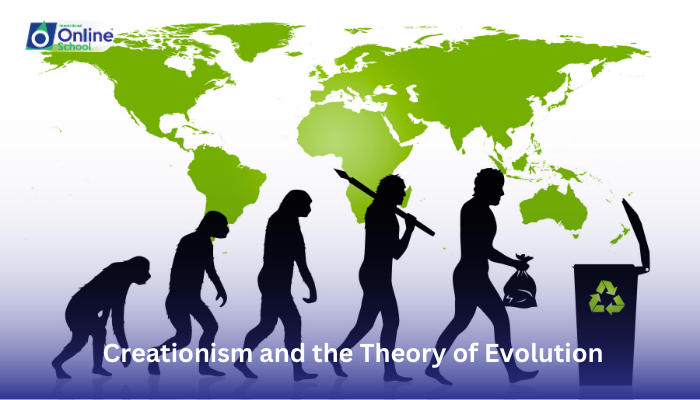
In contrast, the Theory of Evolution proposes a gradual and continuous process of change over vast periods of time. Imagine a world where life emerged and transformed through natural mechanisms, driven by factors like mutations, adaptations, and natural selection. This theory, supported by a wealth of scientific evidence, suggests that all living things share a common ancestor and have evolved over millions of years.
iii. Bridging the Gap: Quranic Perspectives on Evolution:
The Quran, the holy book of Islam, offers verses that resonate with both Creationist and Evolutionary perspectives. While it emphasizes the divine role in creation, it also acknowledges the gradual development of life:
Verse 21:33: "And He it is Who has made the earth an abiding place for you and has set up for you paths thereon that you may go your ways."
Verse 71:53: "And He it is Who has created you in stages."
These verses suggest a gradual process of creation, where life progresses through distinct stages, echoing the evolutionary notion of change over time.
iv. Evidence Supporting Evolution:
The Theory of Evolution isn't just a theory; it's a robust framework supported by evidence from various scientific fields:
Biogeography: The distribution of species across continents reflects their historical movements and adaptations to different environments, like the similar bone structure of bats and birds suggesting a common ancestor.
Paleontology: The fossil record reveals a sequence of life forms that have changed over time, with older fossils resembling simpler forms and newer ones showcasing greater complexity.
Comparative Anatomy: Similarities in the skeletal structure and organ systems of different species, even those seemingly unrelated, point towards a shared ancestry and evolutionary divergence.
Molecular Biology: The analysis of DNA sequences from different organisms reveals remarkable similarities, suggesting a common genetic origin and the gradual accumulation of mutations over time.
The debate between Creationism and Evolution remains a complex and multifaceted one. While faith and science offer different perspectives on the origins of life, both contribute to our understanding of the amazing tapestry of life on Earth. By acknowledging the evidence supporting evolution, we gain valuable insights into the interconnectedness of all living things and the remarkable journey of life on our planet.
